
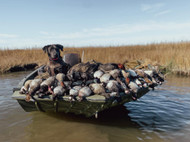
Hunting with Dogs: Gear & Training Tips for Retrievers
Jan 27th 2026
A good retriever doesn’t just make your hunts easier, they make them unforgettable. But a dog that shines in the blind or field doesn’t get there by accident. Success starts months before opening day with the right training and the right gear. Whether you’re hunting ducks in flooded timber or geese in frozen fields, here’s what every hunter should know about preparing their four-legged partner.
Retriever Gear Essentials
Dog Vest
A neoprene or insulated vest keeps your retriever warm in icy water and protects their chest and belly from sticks, rocks, and debris. A properly fitted vest also gives your dog extra buoyancy, reducing fatigue during long retrieves.
Shop Dog Vests at Springhill Outfitters.
Stand or Blind
Having a dry, elevated spot is key for marsh or flooded hunts. A dog stand keeps them comfortable, keeps your gear dry, and helps them mark birds more effectively, as they can see over vegetation. If you’re hunting from a layout blind, your dog needs cover too. A low-profile dog blind keeps them hidden from wary geese and ducks while giving them a comfortable, dedicated spot to wait until it’s time to retrieve. It also prevents them from flaring birds before the shot.
First Aid Kit
Accidents happen, from a cut paw on ice to a thorn in thick cover or even exhaustion during early-season work. A compact canine first aid kit should always be in your blind bag or truck. Along with bandages and antiseptic, a staple gun is a must-have. If your dog suffers a deep cut in the field, a staple gun can temporarily close the wound long enough to safely get them to a vet. It could save their life.
Tracking & Training Collar
Even the best dogs can chase a cripple out of sight. A GPS tracking collar lets you monitor their location in real time for safety and fast recovery. Pair that with a long-range shock collar (up to 500 yards), and you can reinforce commands or issue corrections no matter how far your dog ranges. That combo gives you full control and peace of mind.
Train smarter with our selection of Tracking Collars & E-Collars.
Training Tips
Obedience First
Before moving to retrieving drills, make sure "sit," "stay," and "recall" are flawless. A steady dog won’t break early on the shot, keeping hunts safe and organized.
Marking Drills
Start with bumpers or dummies at varying distances and angles to teach your retriever to mark where birds fall. Progress to longer distances and multiple markers as they improve.
Practice with Training Bumpers.
Water Work
Don’t wait until duck season. Train in ponds, rivers, flooded timber, anywhere, so your dog learns to handle all water types. Use decoys to simulate real hunting conditions
Simulate hunts with Waterfowl Decoys.
Gunfire Conditioning
Ease your dog into gunfire. Start with distant blanks or popper loads and link the sound to a retrieve. Gradually bring the noise closer until your dog views it as a cue, not a threat. Ease the process with blank training loads.
Consistency & Patience
Training takes time. Keep sessions short and positive, and always end in success. A well-trained retriever isn’t just a tool, they’re your field partner for life.
The Payoff
A retriever that’s properly trained and well-equipped will recover more birds and make every hunt smoother and more enjoyable. Invest in gear and training now, and you’ll build a partnership that creates memories for years.
Browse Dog Training Gear & Accessories at Springhill Outfitters.